


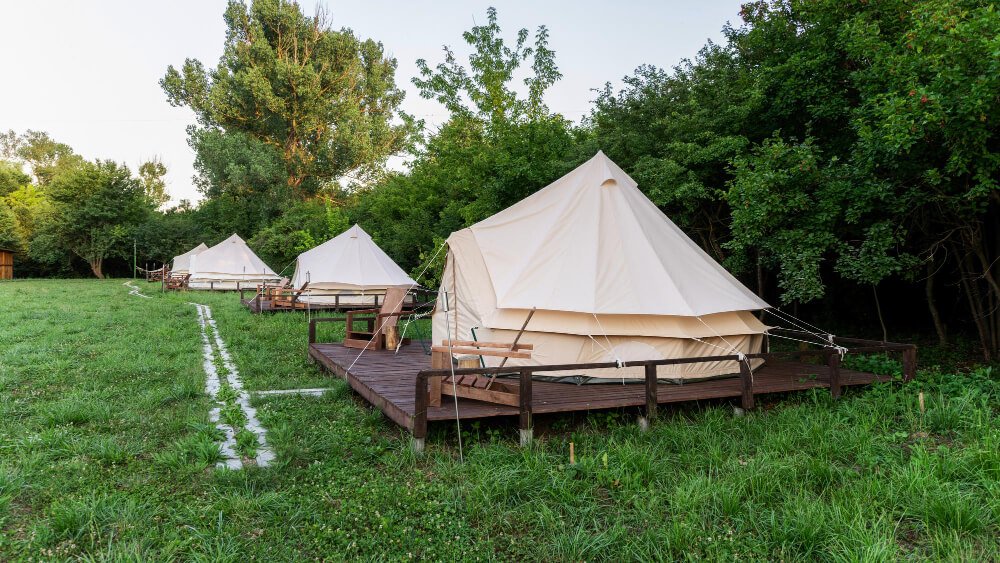
The outdoor setting offers a dynamic environment for businesses to engage with their customer base, showcase their products, and create memorable brand experiences. However, with dozens, if not hundreds, of exhibits fighting for the spotlight in the same space, just getting a logo on the tent is no longer sufficient. The building is a part of the brand, impacting brand visibility, recognition, and first impressions. Custom promotional tents can enhance any event shelter into a brand-new marketing tool. By leveraging strategic design, eye-catching visuals, thoughtful layouts, and interactive elements, custom exhibition tents can help businesses foster a memorable presence that will stick with attendees long after the event concludes.
5 Ways Custom Tents Create Standout Outdoor Brand Experiences
1. Turn the Tent Into a Visual Landmark
When it comes to outdoor events, visibility can start even before you get to the exhibition space. Solid tent proportions, graphics, and recognizable branding can make a tent a visual landmark to identify a business from across a busy area.
Brands, slogans, product images, or campaign messages can be featured on large-format graphics without taking over the structure. Other branded elements, like custom inflatable arches, can be used to extend the branded presence past the tent, leaving a distinctive entrance—one that will naturally draw event traffic towards the booth.
The best designs have a good visual hierarchy. A great logo and a short, well-placed message ensure important information is accessible from a distance.
2. Create a Consistent Brand Environment
More than just logos, effective event branding is achieved through various strategies. A custom tent can create a full visual scene that will facilitate the collaboration between architecture, graphics, furniture, lighting, and promotional materials.
Using the same colors and typography can help reinforce brand recognition; coordinated counters, banners, back walls, and display stands can help make the space look intentional. A consistent visual language will help visitors make a connection with the space, as it will be associated with a particular business.
It is particularly beneficial for companies that are going to be attending multiple shows or outdoor events.
3. Use Layout to Encourage Visitor Movement
Even the most spectacular tent will be useless if it doesn’t work! Displays placed in an unsystematic way may lead to congestion, clutter, and visitors’ hesitation to explore the display area. Custom structures enable the structure to be planned to suit particular goals instead of being forced into a generic structure.
Open entrances can be used to provide an inviting floor-to-environment transition for the event. Product displays may be placed; demonstration areas may be set up in areas that have enough space for people to assemble. Counters and seating can be positioned strategically with no interference with important graphics.
Careful planning of the spaces also supports staff in interacting more naturally with visitors.
4. Make Lighting Part of the Branding Strategy
Lighting is a critical factor in designing a tent because the lighting conditions can change significantly in the outdoors as the day progresses. Illuminating logos, product displays, architecture, and messaging are some ways strategic illumination can highlight and create a unique atmosphere.
There are a number of different options available that can help achieve a more sophisticated presentation, such as LED strips, illuminated counters, backlit graphics, spotlights, and hanging fixtures. Lighting can also help create hierarchy to focus attention on the most important area of the booth.
The use of color temperature and brightness needs to enhance the brand and not overpower it. A high-end business outfit could be suited to more precise and concentrated lighting, whereas a business with a strong consumer presence may require more vibrant lighting to generate dynamism.
5. Build Memorable Experiences, Not Just Displays
The best outdoor exhibit areas provide an event worth stopping for. Although a custom tent can support demonstrations, product trials, games, photo opportunities, presentations, or interactive brand experiences, it works best as the physical structure for these events.
Unique and specific architectural features can support these activities. Curved walls, raised signage, quirky rooflines, inflatable structures, and bespoke entries can create visual moments that spark visitors’ curiosity and make the space memorable.
Interactive experiences can also create valuable secondary exposure. Sharing events via photographs and online can take the event beyond the event grounds.
End Point
To effectively get attention at an outdoor event, basic signage is not enough. Distinctive graphics, well-coordinated design, strategic layouts, purposeful lighting, and engaging experiences are part of the tools that can make the most of limited event space and create recognizable brand environments with custom exhibition tents. A well-designed tent can make any business more discoverable, memorable, and intriguing to explore, whether it is meant for continuous use at trade shows or a specific marketing campaign.
